Great and Free
They cut down the forest on the hill above Weimar and left one tree standing, because Goethe had sat under it. A hundred years before, he had taken his breakfast there off a gold service and looked out at the country and said that a man feels great and free on that spot, as a man always should. They built the camp in a ring around the tree and hanged men from it.
One of the men they held on that hill was a lawyer. Two years before they had the power to do anything to him, he had put the leader himself on a witness stand and kept him there three hours, made him sweat and lose his place in front of a full courtroom, and the leader never forgave it. There was a name he would not allow spoken in his presence after that, and it was the lawyer's. They moved the lawyer through the camps for five years, and on the leader's birthday, ordered to perform with the rest, he stood and sang an old song, that thoughts are free and no one can guess them and they cannot be shot or locked away. He hanged himself before the end. The name stayed unsayable after there was no one left to punish for it.
Another had been a prosecutor. In the first spring of the camps he was sent to look at four prisoners a camp had shot and called escapees, and he saw they had been shot in the back of the head, where you shoot a kneeling man and not a running one, and he wrote down murder and signed his name to it. His country took the page and held it in a drawer for thirteen years, until an enemy army opened the building and read it into another trial. They had moved him to a smaller office. He lived to ninety.
They dug the trenches themselves and did not know it. A week later, on the third of November, they were brought back in the cold and made to undress and stand in the frost. The trucks ran a dance band over them, loud, before the first shot, so the sound a person makes at the edge of a pit would stay in the field. A woman folded her dress, because she had been raised to fold her dress. Then she was made to lie face down on the ones already there, who were not yet cold, and wait, and the waiting was the worst of it, the shots coming down the row toward her one at a time while she lay on people she had stood beside an hour before. The man who reached her was maybe thirty, with a drink in him since breakfast because by the third year there was no other way to do it, and he had done it so often that he no longer aimed. He set the barrel to the back of her neck the way you set a tool to a job, and fired, and the band took the sound and left the rest in the field. They had a name for the two days. Harvest Festival.
The same morning, the same cold, a few hundred kilometers north, the girl turned the dial on the wireless until she found the station she wanted and pulled her stockings on against the floor. She was nineteen. She knew which men from the town had gone out to the field, and she knew not to ask after the neighbors who were no longer on her street, and she hummed along with the band coming out of the box, because there was only the one country and it had only so many songs.
In the field they ran the band until it was too dark to shoot, eighteen thousand the first day, and when the trucks went quiet there was only the field.
They built the camp on sand because the water sat a foot under the surface and a man cannot tunnel through water. Nine thousand prisoners on ground that would not hold a grave. The ones who got the parcels lived. The ones who did not were put into the sand a shovelful at a time, and the sand took them, completely and without a record, as it took everything on that coast.
Eight kilometers east, in the first summer of the war, the district police took two hundred men and one woman out to a field and shot them by hand, on the twenty-fourth of June, before there were trucks for it or a band to run. They were local men. They had bought fish from the people they shot and sold them a hat the year before. Someone wrote down a number and a date, and the number is the only reason any of it is known. Seventeen years later ten of them stood in a courtroom. Some were given three years, the longest sentence fifteen. The country opened an office to find the rest, and the office is still open. One of the ten had spent the years between as the warden of a camp for refugees.
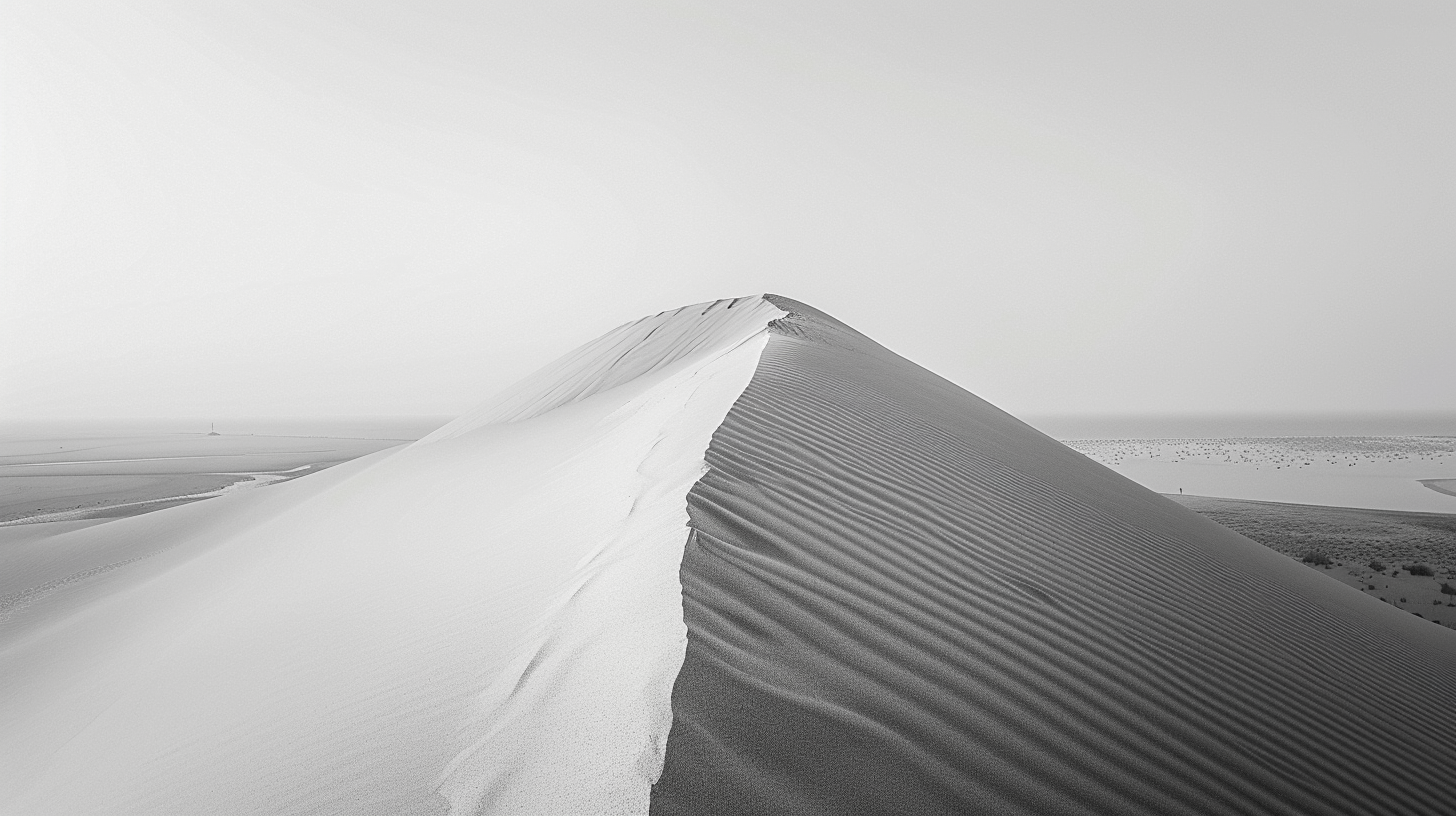
Down the spit from the camp, under the dunes, there are four villages and two graveyards. The dunes walked over them between 1675 and 1854, fifteen meters in a bad year, and went on across the churchyards without slowing, so that in one strip of Europe the dead are buried twice, and the second time was an accident of the wind. To keep the sand from taking the living as well the foresters brought pine up from Denmark and planted it, and the roots caught and mostly held, and the dunes that are left run sixty meters high, and you can buy a ticket and climb to the calm dry top of the thing that ate the towns and see, on a clear day, the lagoon on one side and the sea on the other.
The girl came ashore at the foot of it in October 1944. Her own army had come through her town a few days before headed the wrong way, and a man whose name no one ever kept paid for her place on a boat, and the boat crossed the lagoon and put her on the sand, and she walked south down the spit over ground that had buried four villages and two graveyards and did not look down. What the sand was burying that autumn was not under the spit. It was the camp and the field, a few hours behind her.
The country said afterward that it had not known. But it had words for the thing, and a country does not keep words for what it has never heard of. The East. Resettlement. People said them on the radio and at the table, and a person could carry the whole of it in his mouth all day and set it down at night having said nothing. The ones who said it without the words were not there the next morning.
This summer a boy with the kind of name the country used to keep on lists scored in front of eighty thousand of them, and they stood and sang the name back to him into the floodlit air, and none of them looked down.
After the war they cut the country in two and ran a wall through the middle, and for forty years there were two Germanys, each with the other to blame it on, and then the wall came down, all at once and on no one's schedule, and on the map the country was whole again. The line is still there under the new roads, and along it the old names are said out loud again, in the squares and on the ballots. The villages are where they have always been, which is underneath.
The girl grew old in America. On Christmas Eve there were the carols in German, and on the shelf the good plates that had come over in a trunk, and on Sunday she ran the radio along the dial until she found the old songs. When a visitor asked the wrong question the room closed over it, and the talk moved off the years before the boat the way it moves off a death in the family. When the children were grown they flew over to see it, and the country met them at its best, the river and the castles standing above it, the window boxes, the aunts with the coffee and the cake, the towns scrubbed and rebuilt and lovely, and they came home with a tray of slides, the cathedral, the bridge, the family at the long table, and not one slide of a field, because no one drove them out to a field and no one said the fields were there.
The dunes do not only bury. As they move they give back what they buried, a wall, a well, a row of graves, on their own schedule. When she died her daughter found a diary, and in it, in the old hand, was the one sentence she had never said aloud, that she did not know why she had come, that she had left her country, surfacing like the villages, decades late and meant for no one. By then the country was a word for a place with another name and another language and not one of her people left in it, and there was nothing under there she could have gone back for.
The sand is still moving. You can still buy the ticket. The man who paid for the boat is still nameless, and the girl is under a different ground now, in a country where she could not have named one face the day she came. The forest holds most of the sand and gives up the rest on a schedule no one set, the graves coming up white and clean, a few at a time.
When the anthem played she sang it, low, almost to herself, and did not miss a word. She had been a girl in that country when it did what it did, and she was old now and in another one, and she sang it to the end and meant it, the line that asks the country to bloom and go on blooming: Blüh im Glanze dieses Glückes, blühe, deutsches Vaterland. There was a child in the room who heard her, and who hears that line still, a lifetime and an ocean away, and cannot get through it either.
© 2026 August Holloway / Dead Letter Publishing. All rights reserved.